Pasture Reclamation & Fence Line Clearing in Springfield, MO
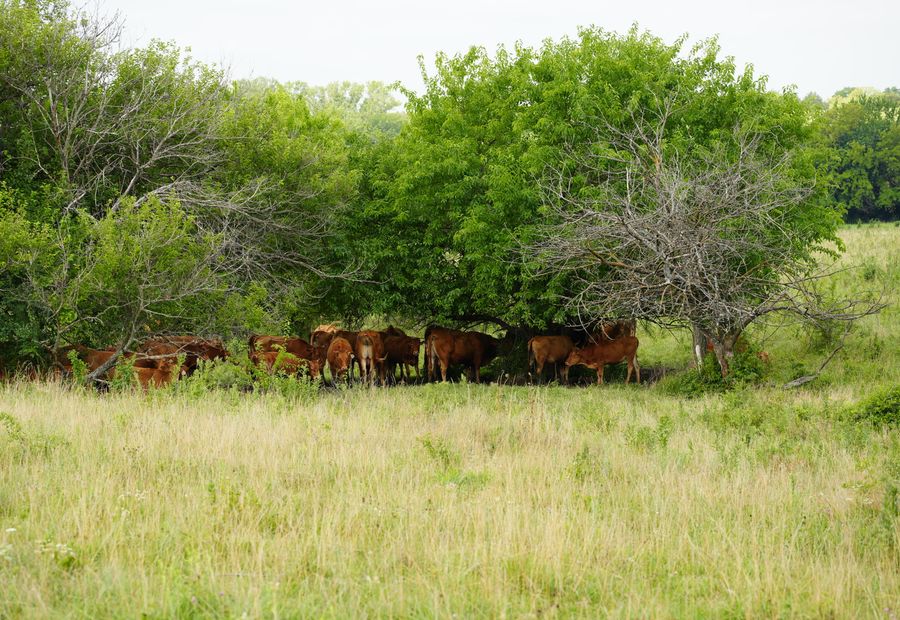
Springfield Mulching reclaims pasture and clears fence lines for cattle operations across Greene, Polk, Dallas, Webster, and Lawrence counties, Missouri. We work grazing ground around Springfield, Fair Grove, Ash Grove, Buffalo, and Marshfield, taking back acres that cedar and brush closed off. The job also covers paddock openings, pond and water gap approaches, gate and lane access, and a cleared line for a fence crew to build on.
Missouri runs near the top of the country in beef cows, and southwest Missouri carries a heavy share of that herd on ground that was never deep to begin with. Fire held the cedar back on these hillsides for centuries. It does not now, so cedar moves from the fence row and the glade edge into open grass, and blackberry and buckbrush fill the gaps behind it. For reclamation we run a Loftness Battle Ax drum, which throws the finest chip of any drum head in the trade, on a Bobcat high flow track loader. Fine chip matters on grazing ground because it settles into a mat you can seed into rather than a rack of chunks a mower has to fight. A blade would take the same cedar out and take the sod and the topsoil with it, and then you are buying dirt and seed instead of just seed.
Fence Lines First
Fence rows carry the seed source, so they get cleared first on most tracts. We cut a clean strip on each side of the wire, which restores the grazing strip, exposes rotten posts, and gives a fence crew room to work. On a new build line we cut the corridor ahead of the crew so they set posts on open ground instead of swinging a driver inside a hedge.
Paddocks, Ponds, and Water Gaps
Rotational grazing needs cross fences and lanes, and both need cleared lines. We open paddock divisions, cattle lanes, and gate approaches to the width you ask for. Pond edges and water gaps get the brush pulled back so cattle can reach water without punching a new trail through a thicket. On karst ground we stay off known sinkholes and off the sink drainage, and we never fill one.
What Comes Back
Cedar cut at grade does not return. Blackberry, locust, and sumac do, from roots the machine never touched. A reclaimed pasture holds best when the grass takes fast and the cattle graze the sprouts. Plan a maintenance pass, spot spray, or a rotary cutter run in year two.
Timing
Late winter suits this work. The ground is firm, the operator sees the fence and the terrain, and seed can go out behind the machine. Saturated fields wait. (417) 555-0146 reaches the operator directly.
How many grazing acres can I get back?
More than most owners expect. Cedar takes a pasture from the outside in, so the loss shows up as a thickening fence row and a closing corner long before the middle goes. Walk your fence line and measure the strip you no longer graze. On a quarter section that strip alone is usually several acres. We measure it with you before quoting.
Do I have to seed after the work?
It depends what is under the cedar. Where a stand went up recently, the old sod and the native seed bank are still down there and will come back on their own with sun and rest. Where the canopy closed years ago and the floor is bare needle litter, plan on seeding. Broadcast into the chip in late winter and let freeze and thaw work the seed down. Keep the cattle off it until it takes.
Can you work along my existing fence without tearing it up?
Yes. The operator cuts a working strip parallel to the wire and keeps the head off the fence. Show him the corners, the gates, and any buried line before he starts. If a section is already grown into the brush, tell us whether it stays or goes, because pulling old wire out of a stand is separate work and it goes faster before the mulcher runs than after.
Will the chips hurt my grass?
A normal layer will not. Chip on a reclaimed pasture breaks rain impact, holds moisture through a dry August, and rots down into thin Ozarks soil that needs the organic matter. Grass grows through it. Where a stand was very dense the layer comes out thicker, and there we spread it out or make a second pass so sunlight reaches the ground.