Springfield Mulching: Forestry Mulching and Land Clearing in Springfield, MO
Springfield Mulching is a forestry mulching and land clearing contractor licensed and insured in Missouri, working acreage on the Springfield Plateau in Greene County and the surrounding Ozarks. Our services are forestry mulching, land clearing, brush and cedar removal, pasture reclamation and fence line clearing, lot and site prep clearing, hunting land, trails and food plot work, bush hogging and rough-cut mowing, and stump grinding. The people who call us own cattle pasture, hay ground, hobby acreage, deer property, and building lots in Greene, Christian, Webster, Polk, and Dallas counties.
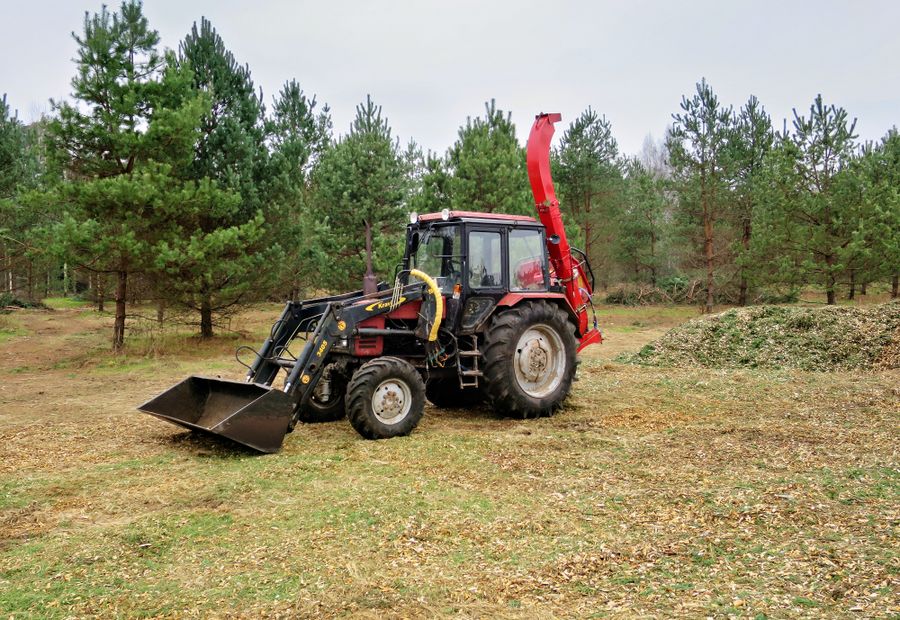
Our head is a Loftness Battle Ax drum, and it rides a high-flow tracked carrier, either an FAE PT machine or a Takeuchi high-flow track loader. Carbide teeth take a standing stem and lay it down as chip. One machine, one pass. Nothing gets stacked, nothing gets lit, and no truck leaves your gate loaded. The root mat stays in the dirt, which counts for a lot on thin plateau soil that has nowhere to go but downhill. A dozer works the other direction. The blade rolls a tree over by the root ball, peels your topsoil up with it, and leaves a heap at the fence line plus a hole at every stump.
Call for a Free Estimate- Licensed and insured in MO
- Loftness drum head on a high-flow tracked carrier
- One pass, no burn pile, nothing hauled off
- Cedar off the glades, off the pasture, off the fence rows
- Greene, Christian, Webster, Polk, and Dallas counties
Forestry Mulching
A mulcher is a forestry service machine with one trick, and it is a good one. A drum turns fast, carbide teeth hit the stem, and the stem becomes chip before it falls over. No saw crew walks the tract. No skidder drags anything. No loader shows up.
Six to eight inches across is all-day work for a high-flow head. Ten inches is one stem at a time and you see it on the invoice. Past about a foot you own timber, and timber can write you a check instead of taking one. We say which one is standing on your place before we price it. More on forestry mulching.
Land Clearing
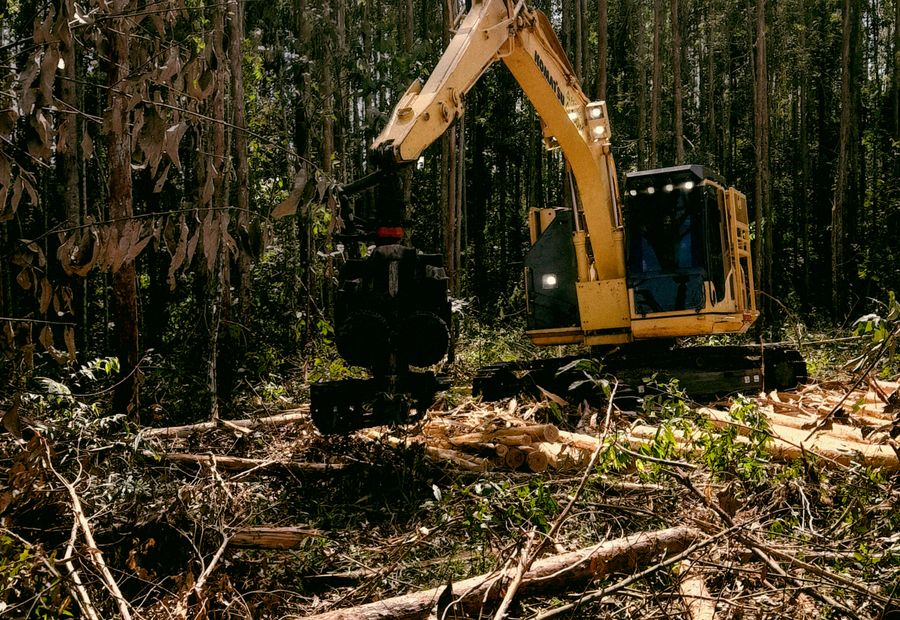
Land clearing is the result you are after. Mulching is one road to it. Dirt machines take another road, and they are the right call when the spec says the roots have to come out. For everything else on Ozarks acreage, a head on tracks finishes cleaner and cheaper.
Then there is the pile. Missouri lets you burn brush from your own place on that same place. Debris from a job a contractor did for you is business waste, and burning that takes a permit from the state before anyone strikes a match. Mulching never makes the pile, so the permit question never comes up and neither does the burn scar. More on land clearing.
Brush and Cedar Removal
Eastern red cedar used to hold to the bluffs and the rock outcrops. Fire kept it there. Once the fires stopped, cedar took the glades, then walked the fence rows out into pasture, and a solid cedar stand shades out everything underneath it. Cut cedar at the ground and it is finished, because cedar will not sprout from a stump.
The rest is news. Blackberry, sumac, locust, privet, sweetgum, and persimmon all come back from the roots. And selective work is the thing a blade cannot do at all. An operator pulls the cedar out from under a white oak and the oak never knows. He thins a glade edge back to rock and grass. He opens an understory and keeps the canopy over it. More on brush and cedar removal.

Pasture Reclamation and Fence Lines
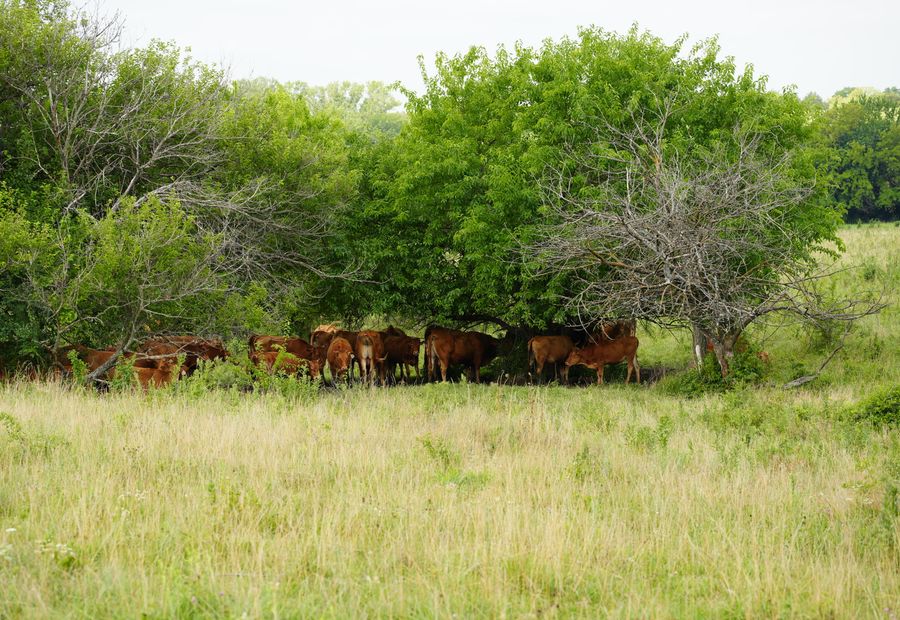
Cattle ground goes acre by acre and nobody notices until the count is off. Cedar seeds under the wire where the mower never reaches. Buckbrush fills the corner. Two or three seasons later a field carries fewer cows than it used to and the owner blames the grass. A mulching head puts that ground back without disturbing the sod that still works.
We run beside standing wire instead of tearing it out. We clear a line to width so a fence crew builds straight the week after. Chip goes down as cover, seed goes on top of it, and gates, water gaps, and paddock openings get handled while the machine is already on your place. More on pasture reclamation.
Lot and Site Prep Clearing
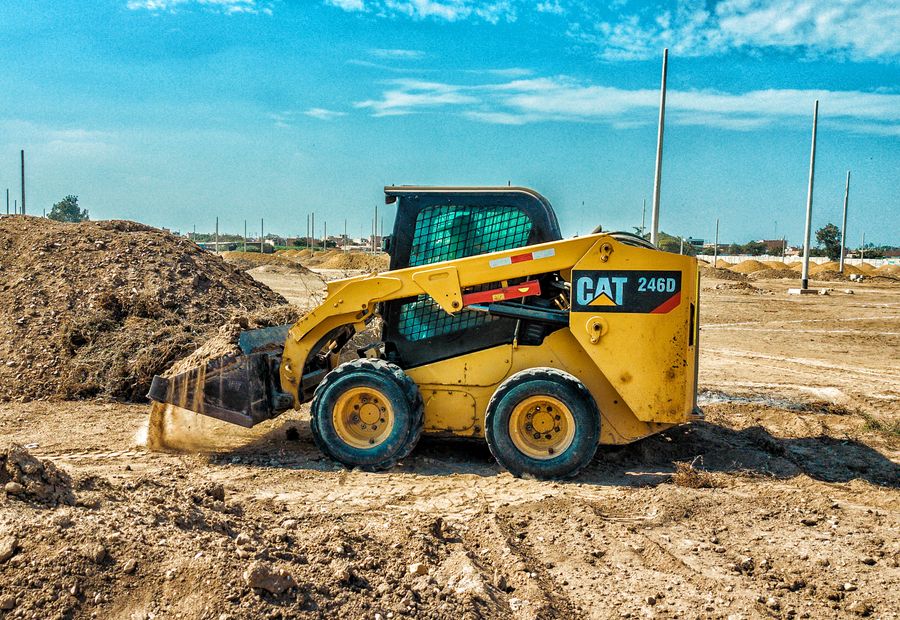
Ask a builder what he needs and you get three answers: the footprint open, a driveway corridor a concrete truck can turn into, and a path to where the septic field and the utility trench are going. A head on tracks does all three in a day or two and hands back a lot you can walk instead of a lot you have to climb.
Here is the limit, plainly. Mulching is phase one. An excavating contractor grubs the root zone out of the pad and packs the fill in lifts, and that is phase two. Clear and grade an acre or more for construction and the state stormwater rules apply, which is your builder's plan to file. Pins and setbacks get walked and flagged before the drum turns. More on lot and site prep clearing.

Hunting Land, Trails and Food Plots
East of here the ground runs toward the Mark Twain National Forest fringe, and that is where the deer property is. A shooting lane is a narrow cut from the stand to the opening. This forestry service machine puts one in during a coffee break, and leaves nothing standing to shoot over and nothing stacked to see around.
We open food plots, cut side-by-side trails to height, and feather an edge so cover steps down instead of ending at a wall. Mast trees stay. Bedding thickets stay. Book it in the dormant months and the ground has a full green-up to answer before anybody climbs into a stand. More on hunting land and trails.
Bush Hogging and Rough-Cut Mowing
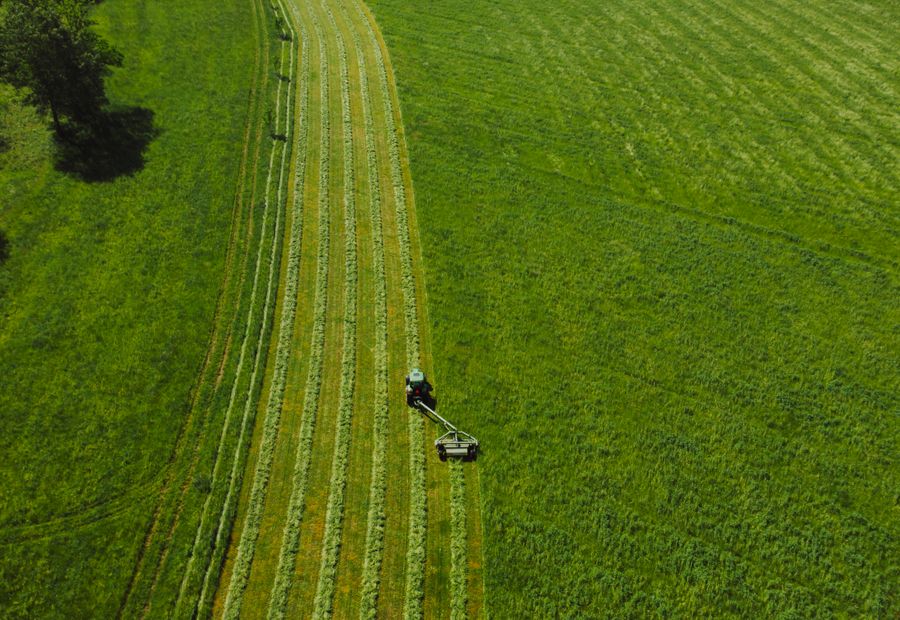
Some fields do not want a mulching head. A rotary cutter takes tall grass, weeds, and saplings under about an inch, and it does that for a small share of what a mulcher costs per acre. Feed it anything thicker and you are paying to beat up a gearbox.
The two machines pair well. Mulching resets ground that got away from you. A rough-cut pass every year or two keeps it from getting away again. We also mow roadsides, easements, and hay field borders, and there is an acreage minimum, because hauling a tractor to Buffalo costs the same whether the field is two acres or twenty. More on bush hogging and rough-cut mowing.
Stump Grinding
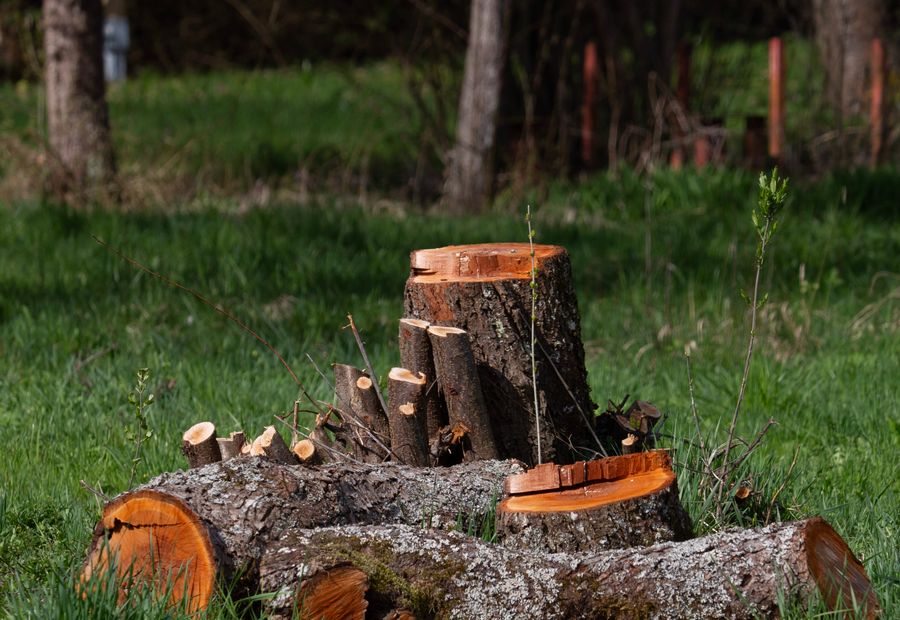
Stumps are not a mulching head's job. A few heads scratch an inch or two under grade and that is where they quit. Getting a stump properly out is a different tool on a different trip, and any excavating contractor in the Ozarks will tell you the same.
Depth follows what you want the spot to do. Mow it and seed it, and you need one depth. Set a post beside it, and you need more. Pour on it, and the whole root zone has to go, which is grubbing. Thin soil over chert here means the grinder finds rock sooner than it does in bottom ground, and we say so before we start. More on stump grinding.
Why Ozarks Landowners Call Us
- One machine, one pass, and nothing leaves your gate. No felling crew, no loader, no dump truck, no pile. Start with forestry mulching.
- Cedar is the standing job here and we treat it that way. Fire used to hold cedar on the bluffs. It does not anymore, and the glades and the pasture are where that shows. See brush and cedar removal.
- Soil this thin cannot be moved twice. A cut at grade leaves the root network holding the hillside through the first gully washer. Scraped ground on the plateau needs silt fence and seed. Mulched ground is already wearing its cover.
- We look at the ground before we quote. Water goes underground fast on this plateau. Where there is an open sinkhole or a drainage running into one, the machine works around it and we plan the job that way. We will not promise anything over one.
- We name the machine and the head. A drum head cuts from any angle and leaves a fine even chip, so it suits hardwood and mixed brush. A disc head eats a bigger stem faster and leaves it coarse. You get told which one shows up and why.
- The limits come out of our mouth first. Big timber, rock, stumps below grade, and a grubbed pad all sit outside what a head does. That conversation belongs on lot and site prep, and it saves people money.
How Forestry Mulching Actually Works
Hardly anybody in this trade puts on paper what the machine does to your dirt. So here it is.
The Head
A drum head carries rows of carbide teeth around a spinning drum. It bites from any angle, keeps holding the material against the housing until the pieces are small, and leaves an even chip behind. Hardwood, mixed brush, and any job where the finish gets looked at wants that head. A disc head throws a heavy plate with blades around the rim. It gets through a fat stem quicker and leaves the tract coarse behind it. Production or finish. That is the whole tradeoff.
The Carrier
Hydraulic flow turns a head, not engine horsepower. Put a real head on a standard flow skid steer and it lugs, then stalls. High-flow tracked machines in the ninety to one hundred thirty horsepower class are what actually work residential acreage here. Wide rubber tracks spread the weight so ground pressure under the carrier is a small fraction of what a tire lays down, and that single number is why a mulcher crosses a soft draw and a wheeled machine digs a trench in it.
How Big a Tree
Six to eight inches is routine. Ten is slower and priced that way. Twelve and up is timber, and timber wants a log truck and a buyer. A landowner who sells his timber and mulches the rest usually pays less overall than the one who grinds everything. Tell us what is standing and we will tell you which side of that line it falls on.
Does It Grow Back
Chip on the ground shades out light seed for a season, maybe two. It does not kill a root system, and no contractor should tell you it does. Cedar is done once it is cut. The sprouters are not, and you will see them in year one or year two. Budget a maintenance pass or a spot treatment on the sprouts from the start and the ground stays open. Find out later and it costs more.
What Mulching Is Not For
Anything below grade, starting with stumps. Grubbing a house pad or a shop pad where the spec calls for the root zone gone and engineered fill packed in lifts. Big timber. Rock, and there is rock here. On a pad job a mulcher is phase one and an excavator is phase two. Both belong in the budget from day one.
Wet Ground, Slope, and Karst
Saturated soil takes track damage that stays in a field for years. A hard rain week moves a start date, and we move it rather than scar your pasture. Slope is the operator's call, not a brochure figure. Tracked carriers hold Ozarks grades that wheels will not, and somewhere above that there is a hill the machine comes off of. Karst is the third one. Surface water on this plateau drops straight underground, so we walk the tract, note the open sinkholes and where the water runs into them, and route the work around them.
How a Job Runs
Walk the Ground
We walk your acreage with you. Stem size, stem count, slope, wet spots, open sinkholes, and which gate a truck and trailer can actually use. Property pins get marked. Acreage and price go on paper before we leave.
Mark the Keepers
Tell us what stays standing. Mast trees, a shade tree at the house site, a spring, a wet weather draw, the walnut your grandad planted. Those get flagged first, because selective work is the point of this machine.
Cut and Chip
The head takes standing material down and lays it out as chip. The operator runs a pattern so no ground gets tracked over twice. Nothing gets piled, nothing gets burned, nothing rides off on a truck.
Finish the Lines
Fence rows get squared to width. Lanes and trail corridors get opened to the height a side-by-side needs. Chip gets spread even across the tract instead of left in windrows where the machine happened to turn.
Walk It Again
We go back over the whole tract with you before the trailer loads out. Then you hear when the sprouters are likely to show, and what a maintenance pass costs if you want one on the calendar.
What Land Clearing Costs Around Springfield
Mulching prices by the acre or by the day, and how thick the stuff stands sets the range. Inside that range the movers are stem size, stem count, slope, how wet the low ground is, travel distance, and whether a grade or a pad follows the clearing. A project minimum applies, because hauling a machine to your place costs the same on a small job as a big one.
| Work | Typical Range | Notes |
|---|---|---|
| Light brush and saplings, per acre | $1,500 - $2,200 | Grown-up field, open understory. Often a few hours an acre |
| Cedar-thick pasture and glade edge, per acre | $2,000 - $2,900 | The common Ozarks job. Most of a day per acre |
| Mixed brush and small trees, per acre | $2,300 - $3,100 | Stems to six inches, hardwood in the mix |
| Heavy wooded acreage, per acre | $3,100 - $4,500 | Dense, bigger diameter, longer than a day per acre |
| Day rate, machine and operator | $1,700 - $2,400 | Fits mixed tasks, trails, and odd-shaped tracts |
| Fence line and shooting lane clearing | $2 - $6 per foot | Width and stem size drive it. Quoted by the run |
| Bush hogging, rough-cut | $70 - $150 per acre | Grass and saplings under an inch. We hold an acreage minimum |
| Stump grinding, per stump | $150 - $450 | Diameter and depth set it. A yard full prices as a lot |
| Project minimum | $2,500 | Covers getting the machine to your property and home again |
One shooting lane or one fence row lands at or near the minimum. Reclaim forty acres of pasture and you are into five figures, because there is no shortcut around acreage. Density beats size every time: twelve open acres of cedar saplings can price under four acres of thick young hardwood.
What moves the price:
- Stem size, and how many stems stand on an acre
- Slope, and whether a carrier holds that grade safely
- Soil moisture, because a wet field changes the date and the plan
- Rock at the surface, which is common on plateau ground
- Access for a truck and trailer, and how wide the gate at the road is
- Selective work around keeper trees, which is slower than open clearing
- Travel out toward Buffalo, Seymour, or Bolivar
- Whether grubbing, grading, or a building pad follows the mulching
Frequently Asked Questions
How much do forestry mulchers charge per hour?
Almost everybody quotes by the project or by the acre, with a day rate as the third option. A minimum covers getting the machine to you. Those hourly figures on the national explainer pages come from people who have never seen your ground. Stem size, how thick it stands, the slope, and the drive out to you are what set a real number.
How long does it take to mulch 1 acre?
Density answers that, not a clock. Cedar saplings and light brush go in a few hours. Mixed brush with stems up to half a foot eats most of a day. Heavy timbered acreage runs past a day for a single acre. Ten minutes standing on the tract gets you a number you can plan around.
What is the difference between land clearing and forestry mulching?
Land clearing is the outcome. Forestry mulching is one method of reaching it. A dozer or an excavator clears by moving soil and roots, so you end up with a debris pile and a crater at every root ball. A mulcher takes the same material standing and puts it on the ground as chip. The dirt machine wins when the job is a building pad that has to be grubbed and filled.
Do you need a permit for forestry mulching in Missouri?
Brush work on your own rural acreage generally needs no permit from the state. Clear and grade an acre or more for construction and the site falls under state stormwater rules, which the builder handles. Burning is the part with strings on it. Brush you cut on your own place can generally burn on that same place. Debris from work a contractor did for you counts as business waste, and that needs a state permit first. Check your county and your fire district too. A mulched tract has no pile in it to light.
How big a tree can a mulcher cut?
Six to eight inches across is routine work. Bigger stems come out one at a time, slower, and each one adds to the bill. Above roughly a foot across you are talking about timber. A timber sale can pay you rather than cost you, so ask before you pay somebody to turn it into chip.
How much to clear 1 acre of heavily wooded land?
Figure three thousand to forty five hundred an acre on heavy wooded Ozarks ground, with twenty five hundred as the project minimum. The first mover inside that spread is stem size and how many of them stand there. Then slope, wet ground, surface rock, machine access, and whether a pad or a grade follows. We price your acre, not a national average acre.
Will the cedar and brush grow back?
Cedar will not. Cut it at the ground and that tree is done, because cedar does not sprout from a stump. The sprouters are another story: blackberry, sumac, locust, privet, sweetgum, and persimmon all return from the root. Chip cover holds light seed down for a season or so and no longer. Put a maintenance pass or a spot treatment on the sprouts into the plan and your ground stays open.
Do you haul the debris away?
Nothing gets hauled off, because nothing is left to haul. The material lies where it grew, as chip. That layer takes the punch out of a hard rain, slows runoff across thin soil, holds moisture through an Ozarks August, and rots down into the dirt. It costs nothing extra and it comes with every job.
Can you clear around a sinkhole?
We work around them, not over them. This plateau is karst, so surface water can disappear underground in a hurry and the ground around an opening is not always what it looks like. We walk the tract first, mark the open sinkholes and the drainage feeding them, and plan the passes to stay clear. Nobody should promise you more than that.
Can I keep certain trees on the tract?
Yes. Most landowners never think to ask, and it is the best part of this machine. An operator takes the cedar and leaves the white oak standing over it. He cuts a lane and keeps the mast trees down both sides. He opens an understory and leaves the canopy alone. Come walk the tract with us and point at what you want left.
Can you work in winter?
Winter is often the best stretch of the year for this. Leaves are down, so the operator reads the terrain, the rock, and the property lines. Dormant wood is dry and brittle and goes through the head faster. Frozen or firm ground holds the carrier up instead of letting it rut. Cold is not what stops us.
Does a wet week stop the work?
The job waits. Saturated soil takes track damage that stays in a field for years, and no amount of chip hides a rut. We would sooner move a date than leave a scar on your pasture. We book all twelve months and schedule around weather instead of promising through it.
Do you handle stumps while you are here?
Yes, but it prices as its own line. A mulching head works at grade or barely under it and stops. Taking a stump out below grade is a separate machine on a separate trip, and the depth depends on whether you plan to mow it, fence beside it, or pour on top of it.
Are you licensed and insured?
Yes. We carry liability insurance and the licensing Missouri and the local jurisdictions require for this work, and we will show you either one before we start. You also get a written estimate listing acreage, method, and price before the trailer leaves the yard.
The Glade and the Plateau
Springfield sits on the Springfield Plateau, the western shelf of the Ozark Highlands. Cherty Mississippian limestone lies under it, and the soil on top is thin and full of rock. That geology writes the rules for every clearing job in this market, and it writes them differently than it does an hour east in the deep hollows.
Where the soil runs thinnest, you get glade. A glade is an opening in the woods floored with limestone, holding grasses and wildflowers that need sun and can live on almost no dirt. Fire kept those openings open for a very long time. Eastern red cedar stayed where it belonged, on the bluffs and the rock outcrops, because fire took out anything that tried to move onto the flats. After the fires stopped, cedar moved. It filled the glades first, then followed the fence rows out into pasture, and a closed cedar canopy shades out the grass and the wildflowers underneath it. Overgrazing, invasive plants, and development pushed the same direction.
That is the standing job around here, and it is why the calls come in. A landowner looks at a hillside he used to run cows on and cannot see the rock through the cedar. A mulching head takes the cedar off and leaves the limestone, the grass seed already in the soil, and the oaks that were there first. A blade takes the cedar, the grass, and the few inches of soil holding both, and then the rock is bare for good.
The other thing under this plateau is holes. Karst country: sinkholes, caves, springs, and creeks that run out of sight partway down their own valley. Rain that falls on your pasture can be underground before it reaches the property line. So we walk a tract before we quote it. We note the open sinkholes, note where the surface water runs toward them, and lay the job out to work around both. That is practice, not a sales feature, and no clearing contractor should promise you anything more than that.
Head east from Rogersville, Marshfield, or Seymour and the character changes again. Oak and hickory take over, the ridges get longer, and the acreage runs toward the National Forest fringe. That is deer country, and the work there is shooting lanes, trails, food plots, and edge feathering rather than pasture. North and west, out toward Fair Grove, Ash Grove, Willard, and up into Polk and Dallas counties, it goes back to cattle and hay ground with cedar leaning on the fence rows.
One more Ozarks fact worth the ink. Missouri lets a landowner burn brush from his own place on that same place. Debris from a paid clearing job is another category entirely, it counts as waste from a business, and burning it takes a state permit first. Add the dry-spell burn bans and a pile can sit in your field for weeks looking at you. Mulching never builds the pile.
Clearing Greene County and the Ozarks
We work acreage across Greene, Christian, Webster, Polk, and Dallas counties in Missouri. That covers the hay and cattle ground north around Fair Grove, Ash Grove, and Willard, the growing county south through Ozark, the James River corridor at Rogersville, the high upland east at Marshfield and Seymour, and rural Dallas County ground up at Buffalo.
Ready to Price Your Acreage?
Call (417) 555-0146 for a free estimate. Rough acres, what is standing on it, and what you want the ground to do afterward: graze it, hunt it, build on it, or just see across it again. Say whether the thickest stems are wrist thick or leg thick, and mention any sinkhole you know about. You will get a straight read on whether this is a mulching job, a bush hog job, an excavator job, or a call to a timber buyer. The calendar runs year round here, and a wet week buys you a new start date rather than a rutted field.