Bush Hogging & Rough-Cut Mowing in Springfield, MO
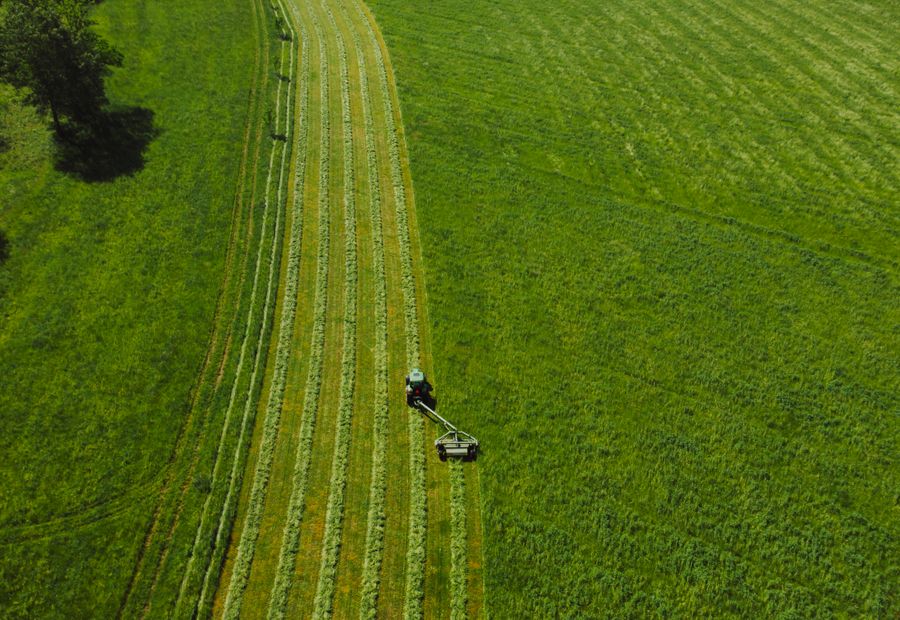
Springfield Mulching bush hogs and rough-cut mows grown-up fields, hay ground gone to weeds, easements, roadsides, vacant acreage, and pond banks around Springfield, Willard, Fair Grove, Rogersville, Ozark, and Marshfield. It is the recurring job in this trade and the cheapest way to hold ground you already paid to clear.
A rotary cutter and a mulching head are two different tools. The cutter swings heavy free blades under a deck behind a tractor. It takes grass, weeds, briar, and soft sprouts fast, cheap, and over a lot of acres in a day, and it lays the material down flat where it stood. It does not grind, it does not cut below grade, and it stops at roughly a two inch stem. For ditch banks, easement shoulders, and anything on a slope a tractor should not climb, we run a Diamond Mowers boom mower and reach the cut from level ground. What a cutter cannot do is take a cedar thicket or a stand of six inch locust. Feed those to a rotary deck and you buy blades and shear bolts all afternoon, and you leave behind spiked stubs at ankle height. That is a mulcher's work, and we price it as such.
Maintenance After Clearing
Every mulching job here has a year two. Cedar stays dead once it is cut at the ground. Blackberry, sumac, locust, and persimmon push new shoots from roots the machine never reached. A mowing pass at the right time takes those sprouts off cheaply and keeps the acre you reclaimed. Let them harden for three seasons and you are paying to clear the same ground twice.
What We Need to Know First
Tall growth hides things that break equipment. Old wire, T-posts, chert ledge, well casings, culvert ends, and stumps from a past cut all live in a grown-up field. Walk the field with the operator or mark the hazards, because a blade that finds a rock throws it. On this plateau we also flag known sinkholes and keep the tractor away from the edge of one.
Acreage and Pricing
We price mowing by the acre with a minimum that covers the trailer trip. Larger open tracts run cheapest per acre. Tight lots, steep banks, and heavy growth run higher. Repeat customers on an annual schedule get put on the calendar early, which is worth doing because summer fills up.
Season
Mowing runs from green-up through fall, and a late cut leaves the field tidy through winter. Soft ground still stops a tractor, so a wet stretch moves a date. (417) 555-0146 gets your field on the schedule.
What size sapling will a rotary cutter take?
A rotary cutter handles grass, weeds, briar, and woody sprouts up to about two inches at the base, depending on the deck and the tractor behind it. Push it past that and you get bent blades, broken shear bolts, and stubs sharp enough to cut a tire. Anything thicker belongs under a mulching head, which grinds a six inch stem without complaint.
How much does bush hogging cost per acre?
Far less than clearing, and it prices by the acre with a minimum for open ground. Three things move it: how tall and thick the growth stands, whether the field hides rock, stumps, or old wire, and how far the tractor has to travel. Small odd-shaped tracts cost more per acre than one large open field, because most of the time goes into turning.
How often should a field be cut?
Once a year keeps a field open. Twice a year keeps it looking kept and stops woody sprouts before they harden off. Skip two seasons and you are back to blackberry and cedar, and the price moves from mowing to clearing. That gap is the reason the yearly pass is worth booking.
Do you mow after a mulching job?
Yes, and it is the right follow-up. A mulching pass takes the standing stand down. Regrowth arrives the next spring from live roots in blackberry, sumac, and locust. A rotary cutter run in year one or year two takes those sprouts off while they are soft and costs a fraction of another mulching pass.