Land Clearing in Springfield, MO
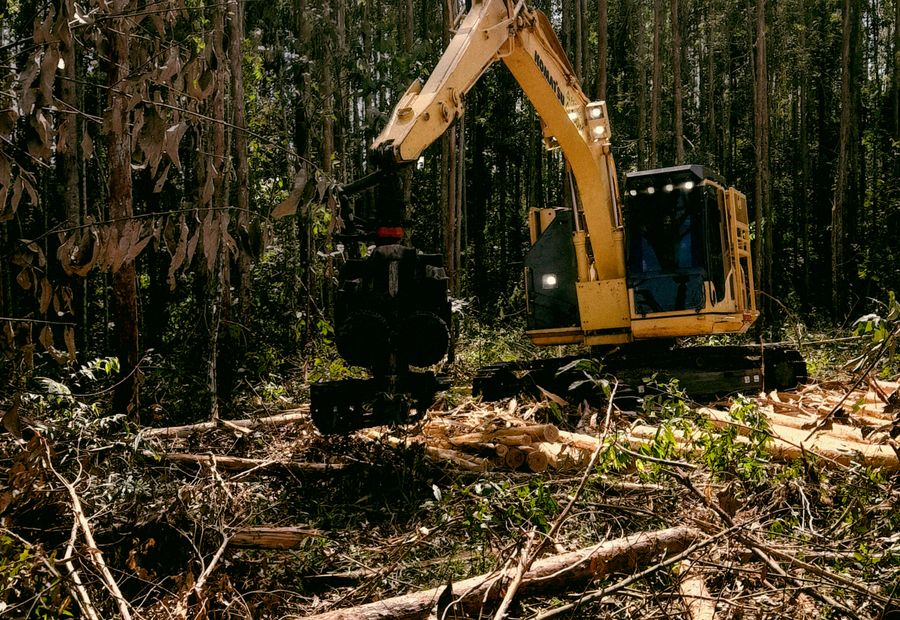
Springfield Mulching clears land across Greene, Christian, Webster, Polk, Dallas, and Lawrence counties, Missouri. We take overgrown acreage, cedar-taken pasture, timbered building tracts, utility and easement corridors, and creek bank thickets from grown up to usable. Owners in Springfield, Willard, Rogersville, Ozark, Marshfield, and Buffalo hire us for one pass or for a phased job that ends in a graded pad.
Three machines clear land and they do different work. A forestry mulcher on a high flow tracked carrier, an FAE PT class machine or its equal, grinds standing material where it stands and leaves the roots holding the soil. A dozer clears by pushing stems over at the root ball, and the blade lifts the best soil on the place along with the wood. An excavator grubs, which means it pulls the root zone out so engineered fill can be compacted in lifts. Each root ball a blade pulls leaves a crater that gets backfilled and then settles for years afterward. The end use picks the machine, not the price list. A pasture, a trail system, or a view line wants the mulcher. A house pad wants the root zone gone.
The Pile You Never Have
Missouri lets a landowner burn yard waste that came off the same place it burns on. Debris from a paid clearing job is a different category. That is business waste, it needs a permit from the state, and a burn ban can shut it down anyway. A pile also leaves a scar that grows nothing for years. Grinding the material in place removes the pile, the permit, and the scar from the job at once.
Phased Clearing
Most build sites here take two phases. Phase one is the mulcher opening the tract, the driveway corridor, and the working room. Phase two is iron in the ground: stumps out, root zone grubbed under the footprint, spoil moved, and the site graded to shed water away from the slab. Splitting the phases costs less than sending a dozer through standing timber, because the mulcher does the volume work at a lower rate.
Grade, Drainage, and Karst
Water on the Springfield Plateau does not always run where the contour says. It goes underground through cracked limestone, and this ground carries sinkholes, caves, and springs. We route around known sinkholes and keep the machine off them. We never fill one or promise anything about one. On slopes we leave chip cover and an intact root mat, which is cheaper protection than silt fence over scraped dirt.
Scheduling
We clear year round. Firm winter ground carries a machine best. A saturated week moves the schedule, and we tell you that instead of rutting your field. (417) 555-0146 gets you a walk of the ground.
How much does it cost to clear one acre of heavily wooded land?
Heavy wooded acreage in the Ozarks generally runs somewhere between fifteen hundred and thirty five hundred dollars an acre, and there is a project minimum around twenty five hundred that covers moving the machine. Five things push a quote inside that band: how big the stems run, how tight they stand, how steep the ground is, whether the soil holds water, and whether a pad or a grade follows the clearing. A national average tells you nothing about your tract. We walk it and price it.
Do I need a permit to clear land in Missouri?
Clearing brush and small trees on your own rural acreage generally needs no state permit. Two things change that. Clearing and grading an acre or more for construction puts the site under the state stormwater rules, and the builder writes that plan. And burning what you cut is its own question, because debris from a paid job counts as business waste under Missouri's burning rules and needs a permit. Mulching leaves nothing to burn. Check your county and your fire district before you plan a fire.
Is it cheaper to mulch or to dozer clear?
Compare finished ground, not the day rate. A dozer price looks lower until you add the burn pile, the permit, the hauling, the backfill for every root ball crater, and the topsoil that went to the field edge with the brush. Mulching prices as one pass with no cleanup behind it. Where the dozer genuinely wins is a job that needs the root zone gone, and then you pay for grubbing because the build requires it.
What happens to the wood and brush you cut?
It stays on your property as chip, spread where it grew. Nothing gets stacked, nothing gets burned, and no truck leaves loaded. The chip breaks rain impact, slows runoff on a slope, and rots down into the thin soil we have here. If you want a specific area left clean for a pad or a driveway, we say so up front, because that is an excavation step and not a mulching one.